

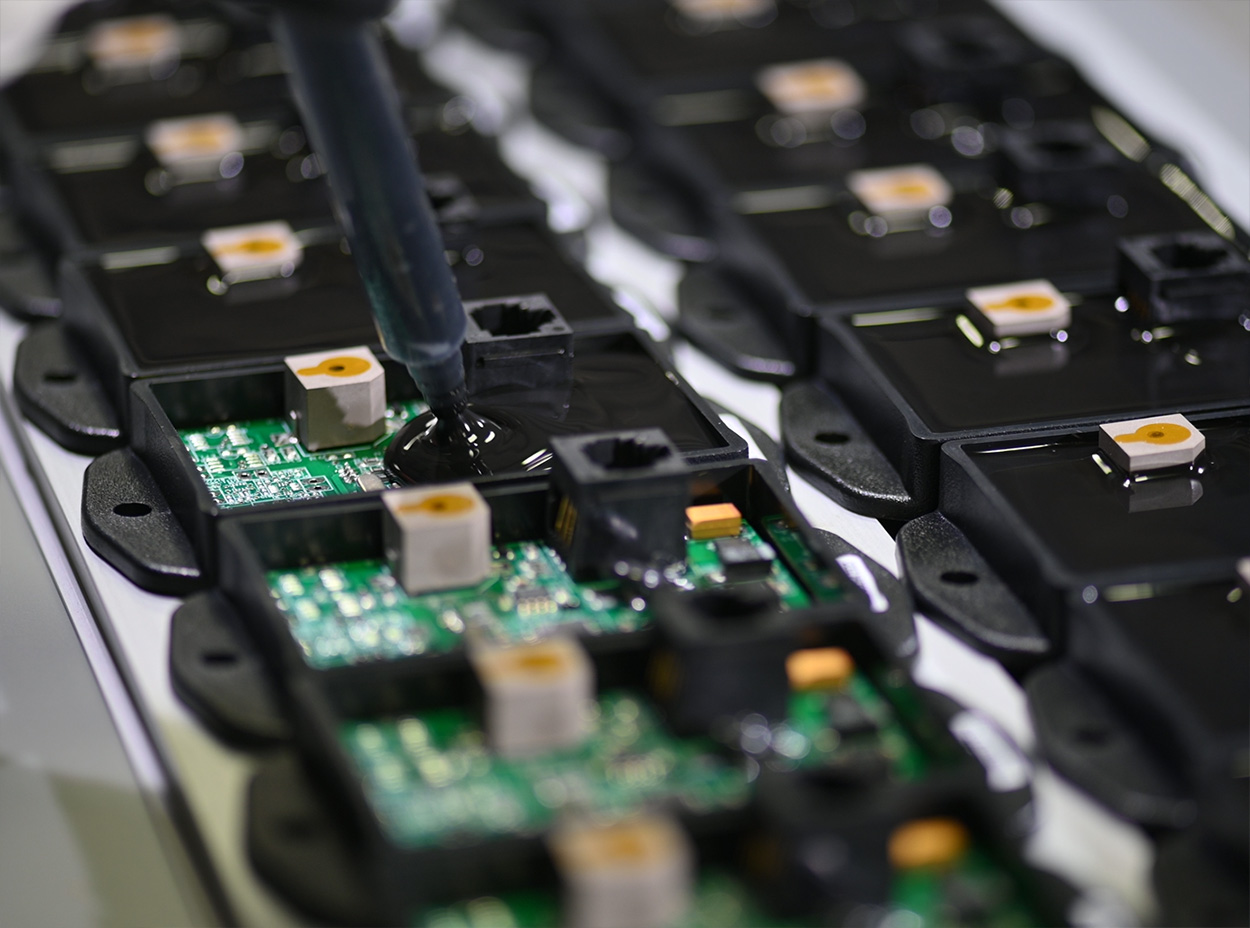
Enhancing Durability Through Potting In Electronics Manufacturing
In today’s demanding electronics landscape, components are expected to operate reliably in harsh environments—exposed to heat, vibration, moisture, chemicals, and mechanical stress. Potting is a proven protection method that enhances durability, performance, and product longevity. By encapsulating electronic assemblies in specialized compounds, manufacturers can significantly improve reliability while reducing field failures and warranty costs.
What Is Potting?
Potting is the process of filling an electronic assembly or enclosure with a liquid compound (such as epoxy, silicone, or polyurethane) that cures into a solid protective mass. Once cured, the compound surrounds and supports components, shielding them from environmental and mechanical stress.
Key Advantages of Potting
1. Environmental Protection
One of the primary reasons manufacturers use potting is to protect electronics from environmental exposure. Potting provides protection against:
- Moisture and humidity
- Dust and debris
- Chemical exposure
- Salt spray and corrosion
- Extreme temperatures
By fully encapsulating sensitive components, potting prevents contaminants from reaching critical circuits.
2. Mechanical Stability and Vibration Resistance
Electronics used in automotive, aerospace, industrial, and defense applications often face high vibration and mechanical shock. Potting helps by:
- Securing components in place
- Reducing stress on solder joints
- Minimizing micro-movement and fatigue
- Absorbing shock and vibration
This significantly increases long-term reliability in high-stress environments.
3. Thermal Management
Certain potting materials are engineered with thermal conductivity properties that help dissipate heat away from components. Thermal benefits include:
- Improved heat transfer
- Reduced thermal hotspots
- Enhanced performance stability
- Extended component lifespan
Thermally conductive epoxies and silicones are commonly used for power supplies, LED drivers, and high-power electronics.
4. Electrical Insulation
Potting compounds provide dielectric insulation that prevents electrical arcing and short circuits. Electrical advantages:
- High dielectric strength
- Protection against voltage breakdown
- Improved safety compliance
- Reduced risk of electrical failure
5. Protection Against Tampering and IP Security
Potting makes reverse engineering or tampering with circuitry significantly more difficult. Benefits include:
- Enhanced intellectual property protection
- Tamper resistance
- Increased product security
Potting vs. Conformal Coating: A Comparison
| Feature | Potting | Conformal Coating |
|---|---|---|
| Coverage | Fully encapsulates components | Thin protective layer |
| Moisture Protection | Excellent | Moderate |
| Mechanical Support | High | Minimal |
| Vibration Resistance | Excellent | Limited |
| Reworkability | Very Difficult | Easier |
| Weight Added | Higher | Minimal |
| IP Protection | Strong | Limited |
Common Potting Materials Comparison
| Property | Epoxy | Silicone | Polyurethane |
|---|---|---|---|
| Hardness | Rigid | Flexible | Semi-rigid |
| Thermal Conductivity | Moderate to High | Moderate | Low to Moderate |
| Vibration Resistance | Moderate | Excellent | Good |
| Chemical Resistance | Excellent | Good | Good |
| Reworkability | Very Low | Low | Moderate |
| Best For | Harsh industrial, automotive | High vibration, temperature cycling | Consumer and general industrial |
Industries That Benefit Most from Potting
- Automotive electronics
- Aerospace and defense systems
- Industrial control systems
- LED lighting and power supplies
- Renewable energy equipment
- Medical devices
In these industries, reliability is not optional—it is mission-critical.
When Should You Consider Potting?
Potting is particularly advantageous when:
- Products operate in harsh or outdoor environments
- High vibration or mechanical stress is expected
- Long service life is required
- Electrical insulation is critical
- IP protection is a concern
- Field failure costs are high
Conclusion
Potting remains one of the most effective protection strategies in electronics manufacturing. By enhancing environmental resistance, mechanical stability, thermal management, and electrical insulation, potting significantly improves product durability and reliability.
While it may add material cost and limit reworkability, the long-term benefits—reduced failures, improved performance, and extended service life—often outweigh the trade-offs. For manufacturers focused on high-reliability electronics, potting is not just an option—it’s a strategic advantage.
Partner with EMS, Inc. For Professional Potting Services
Selecting the right potting material and process is just as important as the design of the electronics themselves. Partnering with an experienced manufacturing provider ensures consistent quality, proper material selection, and reliable production results.
EMS, Inc. delivers precision potting services tailored to the specific requirements of your application. From small electronic assemblies to complex harnesses and control systems, our team understands how to protect sensitive components while maintaining performance and manufacturability.
Why partner with EMS, Inc.?
- Expert material selection based on environmental and performance requirements
- Controlled dispensing processes for accuracy and repeatability
- Experience with epoxy, silicone, and polyurethane systems
- High-reliability manufacturing for industrial, automotive, and specialty applications
- Quality-focused production in a clean, well-equipped facility
Whether you need vibration resistance, thermal management, environmental sealing, or enhanced electrical insulation, EMS, Inc. works closely with your team to deliver dependable, long-lasting potting solutions that support your product’s success in the field.
Contact us today to learn how we can support your next electronic manufacturing project with precision, reliability, and speed.