

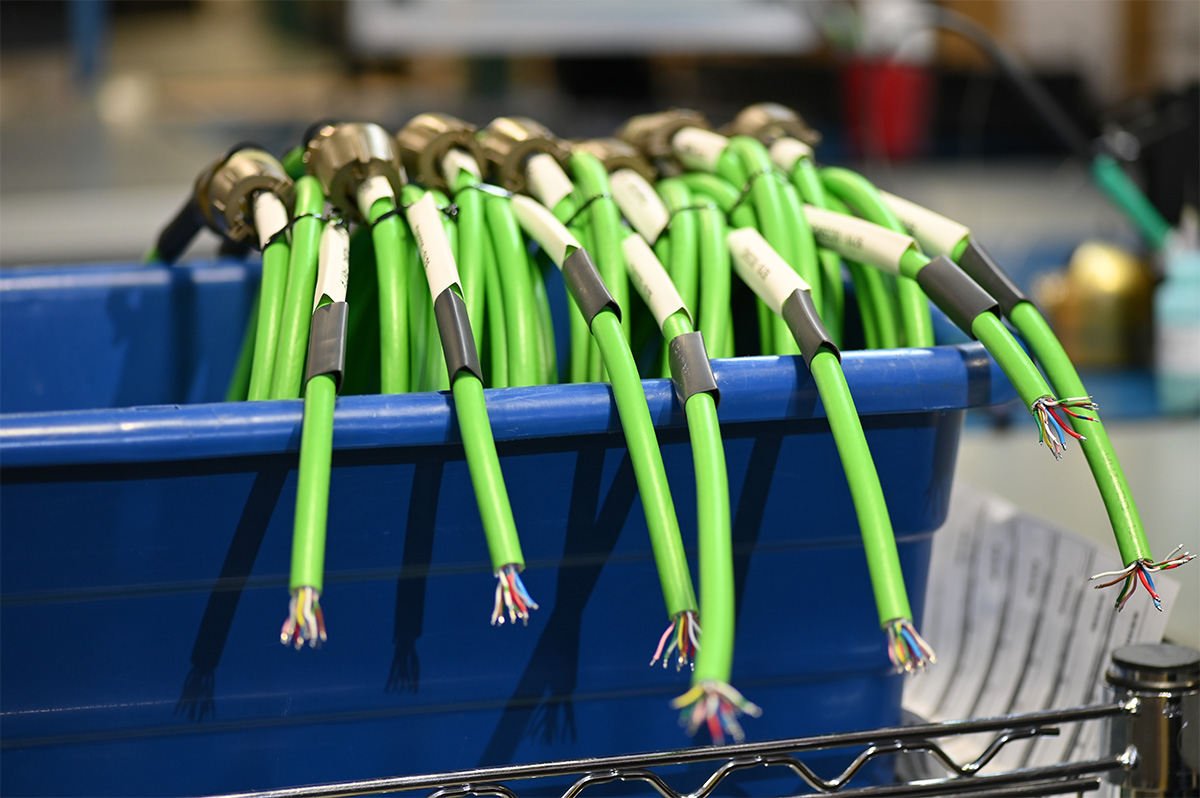
What Is The Difference Between A Wire Harness And A Cable Assembly?
In electronics manufacturing, efficient power and signal transmission is critical to system performance and reliability. Two essential components that facilitate these transmissions are wire harnesses and cable assemblies. While these terms are often used interchangeably, they have distinct structural differences, applications, and advantages. Understanding the differences between wire harnesses and cable assemblies is vital for design engineers, procurement specialists, and manufacturing professionals.
Definition of Wire Harness and Cable Assembly
Wire Harness
A wire harness is an organized bundle of wires, cables, or conductors that transmit electrical signals or power. Each wire in a harness typically has its own insulation and is bound together using cable ties, lacing, tubing, or wraps. The wires often terminate in connectors, terminals, or other end devices.
Cable Assembly
A cable assembly is a group of wires or cables that are enclosed within a single protective outer sheath, such as a thermoplastic or braided jacket. This outer layer provides added protection against environmental factors like abrasion, moisture, and chemical exposure.
Key Differences Between Wire Harness and Cable Assembly
| Feature | Wire Harness | Cable Assembly |
|---|---|---|
| Structure | Group of individually insulated wires bundled together | Wires/cables encased in a single external sheath |
| Protection Level | Minimal protection; mainly organizational | High protection from mechanical wear and environment |
| Flexibility | More flexible layout; can fit tight spaces | Less flexible due to thick outer jacket |
| Application Environment | Suitable for dry, enclosed environments | Ideal for harsh or outdoor conditions |
| Cost | Lower material cost | Higher cost due to added protection |
| Maintenance | Easier to trace and replace individual wires | More difficult to inspect or repair internally |
Applications in Electronics Manufacturing
Wire Harness Use
- Consumer Electronics: Connecting internal components of appliances, gaming consoles, or personal computers.
- Automotive Interiors: Routing signals between dashboard controls and electronic control units.
- Control Panels: Organizing internal wiring of industrial machines or factory automation systems.
Cable Assembly Use
- Medical Equipment: External cable connections where durability and cleanliness are crucial.
- Aerospace and Defense: Withstanding vibration, temperature, and EMI in aircraft or military equipment.
- Outdoor Electronics: Telecom infrastructure or surveillance systems exposed to the elements.
Manufacturing Considerations
Design
- Wire harnesses require detailed layout drawings to ensure proper routing and labeling.
- Cable assemblies need upfront specification of shielding, jacketing, and environmental resistance.
Assembly
- Wire harnesses are often assembled on peg boards for routing accuracy.
- Cable assemblies may involve overmolding or strain relief components to secure connectors.
Testing
Both undergo continuity, insulation resistance, and high-voltage (hipot) tests, but cable assemblies may also be tested for environmental durability and EMI shielding.
Conclusion
While both wire harnesses and cable assemblies serve the purpose of managing electrical connections, the choice between them depends on environmental demands, complexity, cost, and space constraints. In electronics manufacturing, selecting the right solution ensures system performance, safety, and long-term reliability. A clear understanding of their differences helps engineers and manufacturers build optimized products tailored to their specific application needs.