
Let Us Know How We Can Help. We Are Your Dedicated Solutions Provider.


Box Build Assembly
- Home
- Box Build Assembly
Box Build Assembly Services
A box build assembly service covers everything needed to turn a bill of materials into a finished, ready-to-use product: sourcing components and enclosures, building and testing the printed circuit boards, integrating mechanical and electro-mechanical parts, and packaging the finished unit for shipment. Rather than sourcing boards, wiring, and enclosures from separate vendors, a box build service consolidates the entire build under one manufacturing partner. The goal is a complete, tested product – not just an assembled circuit board.
// ELECTRICAL AND ELECTRO-MECHANICAL Box Build ASSEMBLY
Complete Box Build Assembly Services for Seamless Integration
EMS, Inc. delivers complete box build assembly services – from initial component sourcing through final system testing, packaging, and shipment – all under one roof at our Lincoln, Arkansas facility.
As an ISO 9001:2015-certified contract manufacturer with over two decades of experience, we take full ownership of turning your bill of materials into a finished, tested product ready to install or ship directly to your end customer. Whether you need a single complex prototype or a scalable production run, our team consolidates mechanical assembly, PCB assembly, wiring, and electro-mechanical integration into a single point of accountability, so you’re not managing five vendors to get one product.
What Is Box Build Assembly?
Box build assembly (also called electro-mechanical assembly or systems integration) is the process of assembling a complete, finished electronic product inside its enclosure — the “box.” It goes beyond populating a circuit board: a box build combines one or more printed circuit board assemblies (PCBAs) with wiring and cable harnesses, connectors, switches, displays, power supplies, and the mechanical enclosure itself, then integrates, tests, and packages the result as a ready-to-use system.
A finished box build can range from a simple control box with a single PCB and a handful of connectors to a complex piece of industrial equipment with multiple sub-assemblies, embedded software, and full environmental testing. What defines the service is scope: box build assembly is the step where individual components and sub-assemblies become one working product.


// Built for Complex, Regulated, and High-Mix Builds
Why Choose EMS for Box Build Assembly Services
One point of accountability. Mechanical assembly, PCB assembly, wiring, sourcing, testing, and packaging all happen under one roof.
ISO 9001:2015-certified quality system, backed by in-house AOI, SPI, X-ray, and ICT inspection on every build.
Over two decades of contract manufacturing experience, including the complex, labor-intensive projects other shops turn away.
U.S.-based manufacturing at our Lincoln, Arkansas facility - scalable from a single prototype to full production runs.
// Box Build Assembly Services Scope
Our Box Build Assembly Services & Capabilities
EMS handles every stage of the box build under one roof, which means fewer handoffs, fewer opportunities for miscommunication, and one team accountable for the finished product.
Component Sourcing
With our expert component sourcing, we supply every component - power supplies, relays, DIN rails, sensors, switches - and enclosures of any size or material, giving you everything needed to finish your box build.
PCB Design & Assembly
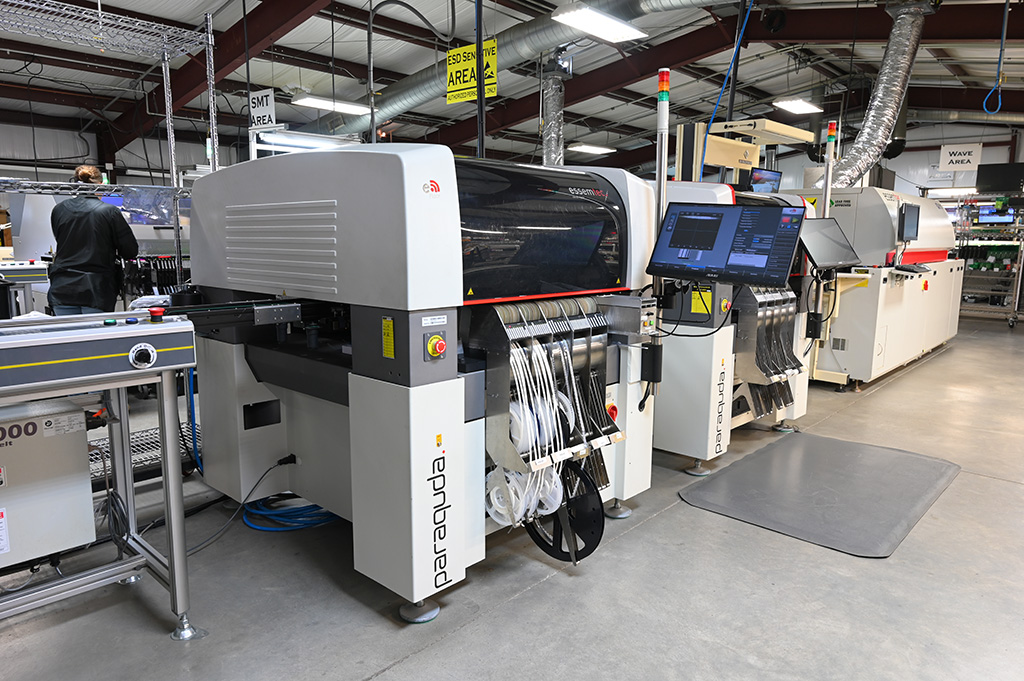
From prototyping through full production, we build the PCBAs at the heart of your box build using SMT, through-hole, and mixed-technology assembly across four in-house SMT lines. Need layout support first? Our DFM and PCB design teams can review your design before it reaches the production floor.
Cable & Wire Assembly
Our expert cable and wire harness assembly capabilities ensure reliable connections between PCBs and electronic elements like sensors, displays, power supplies, and ventilation, including complex harness configurations.
Sub-Assemblies
We fabricate and assemble control panels, power distribution units (PDUs), communication modules, and sensor arrays as discrete sub-assemblies before they're integrated into the final system.
System Level Assembly
Our technicians integrate every sub-assembly, harness, and enclosure component into the finished unit, verifying fit, function, and electrical continuity at each stage of final assembly.
Software Installation & Configuration
Where a build requires it, we load and configure firmware or software prior to shipment, so your product is deployment-ready the moment it arrives.
Testing
Quality assurance is crucial in electro mechanical box build assembly, requiring multiple tests including functional, performance, and environmental testing to ensure the product functions correctly under expected conditions, ensuring optimal performance.
Packaging, Labeling, Shipping
Before starting production, we work with you to plan the packaging, labeling, and delivery of the product. This step makes sure everything is secure during shipping and that your product arrives in perfect shape and working order.
Warehousing
You can count on us for a variety of custom-sized packaging to keep your components safe during storage and shipping. Our solutions protect assembled parts from damage throughout the warehouse stay and along the supply chain.
// From Quote to Shipment
How Our Box Build Assembly Services Work
A predictable process is what keeps a box build on schedule. Here’s how a project moves through our facility, from initial DFM review to a finished, tested product on your dock.
Design & DFM Review
We review your BOM, assembly drawings, and specs, flagging design-for-manufacturing issues before production starts.
Component Sourcing & Kitting
Our supply chain team procures and kits every component your build requires.
PCB & Sub-Assembly Fabrication
PCBAs and any sub-assemblies are built and verified independently.
Enclosure & Mechanical Integration
Enclosures are prepped and mechanical components mounted and fitted.
Wiring & Cable Harnessing
Custom harnesses connect PCBAs to sensors, displays, and sub-assemblies.
System Integration & Software Load
Sub-assemblies come together into the finished unit; firmware is installed where required.
Testing & Quality Validation
AOI, SPI, X-ray, and ICT combine with functional and environmental testing.
Packaging, Labeling & Shipment
Finished units are packaged to spec and shipped - or warehoused until needed.
INDUSTRIES WE SERVE
EMS builds box build assemblies for a range of industries, including agriculture, fitness, HVAC, IoT, oil & gas, transportation & logistics, and other industrial and telecommunications applications. Every build is customized to the regulatory, environmental, and durability requirements of its end market.
BUILT TO SCALE – LOW, MID, HIGH-VOLUME BOX BUILD
Box build projects rarely stay one size. A single prototype may evolve into full production, and the wrong partner can force you to re-qualify at every stage. From low volume PCB assembly for pilot builds to high volume PCB assembly and final integration, EMS keeps the same team, tooling, and quality processes throughout.
// Get an Accurate Estimate
How Much Does Box Build Assembly Services Cost?
Box build assembly is priced per project rather than at a flat rate, because the cost depends on several factors specific to your product:
Complexity and component count - more sub-assemblies, harnesses, and connectors mean more labor and integration time.
Testing & validation requirements - functional, environmental, and burn-in testing add time and cost.
Component sourcing - long-lead-time or hard-to-source parts can affect both cost and schedule.
Enclosure type - off-the-shelf enclosures typically cost less than custom-machined or custom-molded housings.
Volume - prototype and low-volume runs carry higher per-unit costs; unit costs improve as volume increases.
Because every build is different, the most accurate way to get a number is a project-specific quote. Send us your BOM and assembly drawings for a detailed cost and lead-time estimate.
// Our Work
More Than Box Builds Services
A sample of finished projects, from full box builds to the PCB assemblies, harnesses, and sub-systems that go into them.


// Most Frequent Questions
Box Build Assembly Services FAQ
PCB assembly focuses on mounting and soldering components onto a circuit board. Box build is a broader process, integrating the PCBA with other components (cables, enclosures, etc.) to create a complete, functional system. PCB assembly is often a subset of box build.
- PCBs: The core electronic platform.
- Enclosures: Protective casings (metal or plastic).
- Wire Harnesses/Cables: For electrical connectivity.
- Electromechanical Parts: Switches, sensors, or displays.
- Power Supplies: For regulating voltage. The complexity varies from simple PCB enclosures to intricate systems with multiple sub-assemblies.
- Bill of Materials (BOM): List of components, part numbers, and quantities.
- Assembly Drawings: Visual instructions, from simple diagrams to 3D CAD models.
- Regulatory Requirements: Standards like RoHS, UL, or FCC.
- Test Procedures: Specifications for functional and safety tests.
- Packaging/Shipping Needs: Details on size, weight, and handling.
Yes, box builds are highly customizable, from enclosure design to component selection, ensuring compatibility with your systems and aesthetic preferences.
Common industries include electronics, aerospace, automotive, medical, telecommunications, and industrial applications for products like control panels, diagnostic devices, and battery systems.
Lead times vary based on complexity and component availability, typically ranging from 2-4 weeks after receiving all components. Prototypes may take less time, while high-volume orders could take longer.
Yes. We support everything from single prototype units through scalable production volume, so you can validate a design with us before committing to a full production run.
Yes. Our team reviews your BOM and assembly drawings for design-for-manufacturing issues before your project moves into production, helping catch costly problems early.
// From the Blog
Box Build Assembly Services Insights

Choosing a Box Build Assembly Manufacturer: 8 Questions to Ask Before You Quote
Choosing a box build assembly manufacturer? Here are 8 questions to ask before you request a quote, and what a strong answer from each manufacturer sounds like.

What Is Box Build Assembly?
Box build assembly covers everything it takes to turn a bill of materials into a finished, ready-to-use product — from component and enclosure sourcing through cable harnessing, system integration, testing, and shipment. This guide breaks down what's included in a typical project, walks through the process step by step, and covers what both engineers and buyers should look for before committing to a manufacturing partner.
Box Build Assembly for Electronics Manufacturing
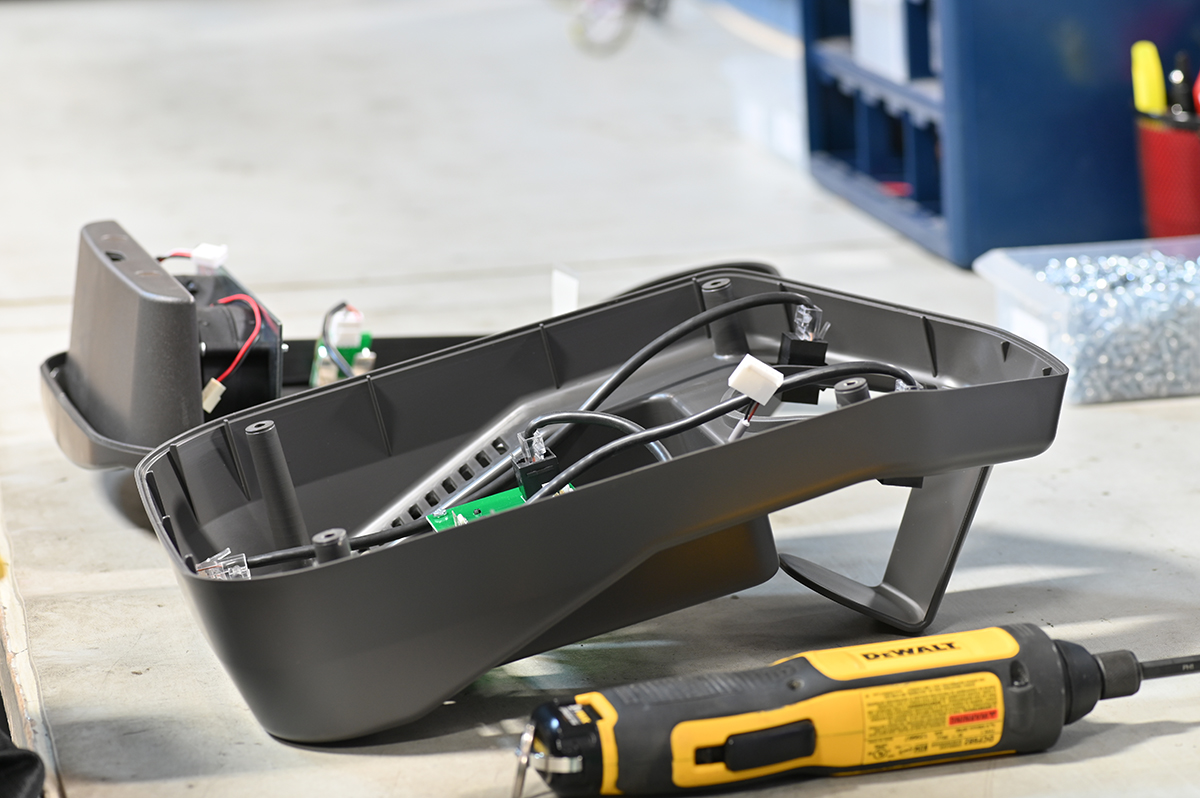
While PCB assembly often gets the spotlight, box build assembly is where everything comes together. It’s the final, critical step that transforms individual components into a fully functioning device. And when handled by an experienced manufacturing partner, it can unlock significant operational and strategic advantages.

Box Build vs. PCB Assembly
PCB assembly covers populating and testing a bare circuit board, while box build goes further, integrating boards into a complete, ready-to-use enclosure. Confusing the two can lead to scope gaps and mismatched vendor quotes, so the piece recommends clarifying requirements upfront and using one manufacturing partner for both to keep things accountable and on schedule.
// Start to Finish Electronics Manufacturing Services
EMS' Capabilities
EMS stands out in turning ideas into finished products in one location. For over two decades we have assisted entrepreneurs in turning ideas into finished products. We also excel at handling “Dirty Jobs” – the demanding, labor-intensive tasks that can hinder production. Whether it’s a medical device, military equipment, or a high-end gadget, we have the tools and experience to realize your vision.
GETTING STARTED
Getting your project started is easy. Just share your idea with our team, and we will give you expert advice and suggestions on the materials, timeline, and cost breakdown required to complete the project. We guarantee the highest level of performance and effectiveness for your particular use.